Showing posts with label Nuclear. Show all posts

Saturday, May 07, 2011

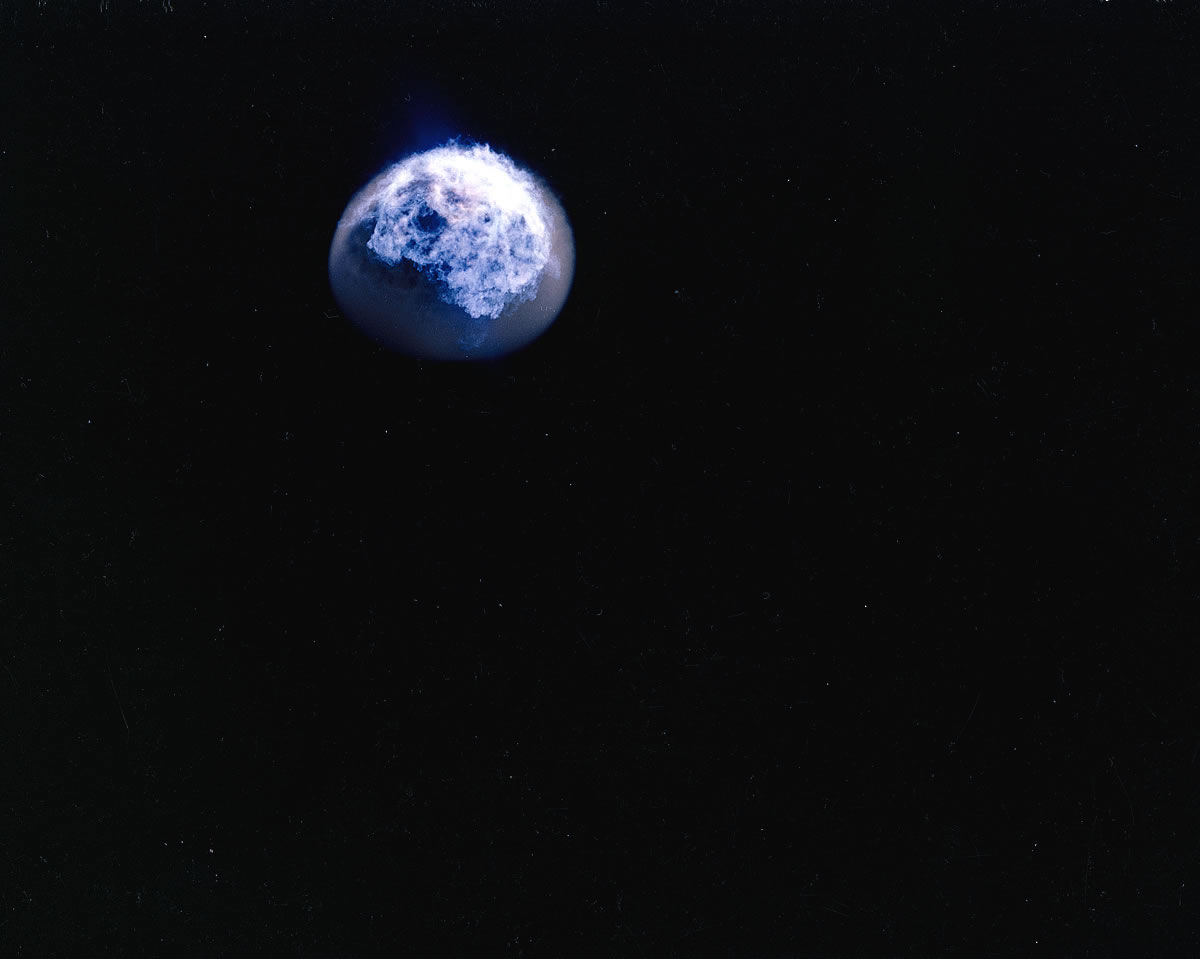
Atmospheric nuclear testing, as seen from space

Operation Fishbowl, 1962

More pictures here.
More info here.

Thursday, March 31, 2011

Antonov An-225s to save Japan


The world's largest plane will be used to transport the world's largest concrete pumps (2 of them) from ATL and LAX to Japan.  This will happen around April 9.  The Putzmeister pumps are currently being retrofitted so that they can spray water into the Fukushima reactors.  But if TEPCO eventually wants to encase the reactors in concrete (a la Chernobyl), then the pumps can be re-retrofitted.  Each pump weighs 190,000 pounds.


Friday, March 18, 2011

Japanese man with bicycle, 1945 and 2011

 Miyagi Prefecture, earthquake and tsunami, 2011

Nagasaki, atomic bomb, 1945

Thursday, March 17, 2011

Wednesday, March 16, 2011

The Fukushima 50

The workers (some or all may be volunteers) fighting to gain the upper hand at the nuclear reactor complex may be made up of older retirees since they are more likely to die of old age than radiation-related ailments.

Monday, March 14, 2011

Sunday, March 13, 2011

Saturday, March 12, 2011

Where NOT to buy potassium iodide


They are not available at CVS or Rite-Aid.

Update 1: GNC has a multi-vitamin that contains potassium iodide.  However, the salesman told me that the amount is very, very small.

Update 2: My source at another nationwide pharmacy chain says its two distributors do not have any available either.

*It goes without saying, but consult with a trusted medical professional before you do anything.

Nuclear fallout map is FAKE


It's fake, people. And pretty sick and twisted as well.

Locations of nuclear power plants in California

With Chile and Japan having already experienced their respective "Big Ones", it's California's turn.  So where are our nuclear plants and reactors?

California has two plants; each has two reactors.  They are all next to the Pacific Ocean.  They are:

  • Diablo Canyon, Avila Beach (San Luis Obispo County): Unit 1 at 1,073 MW, Unit 2 at 1,087 MW.
  • San Onofre, south of San Clemente (San Diego County): Unit 2 at 1,070 MW, Unit 3 at 1,080 MW, Unit 1 is decommissioned.


The San Onofre plant was featured in Leslie Nielsen's Naked Gun.  As the main character drove by it, he said: Everything I see reminds me of her.

Surfers from my high school enjoyed surfing next to the plant because of the warm water discharge.  Youth.

Thursday, November 18, 2010

Nuclear powered Cold War bombers


If you enjoy Hooniverse, you will probably like Atomic Toasters.  It's brought to you by the same crew, and it's about classic pieces of technology.  Today, they have stories about Soviet nuclear powered bombers and American nuclear powered bombers.  Prepare to drop your jaws.

Thursday, November 04, 2010

French nuclear powered aircraft carrier Charles de Gaulle

France is the only country other than the United States that has a nuclear powered aircraft carrier.  The CDG carries older Dassault-Breguet Super Etendards, newer Dassault Rafales, and Northrup Grumman E-2 Hawkeye Airborne Early Warning aircraft.

This video has some incredible footage of Rafales landing and taking off.  Note the Bond-esque background music.  Beginning at 6:07, there are shots of planes landing and taking off at night.

Tuesday, October 12, 2010

Foreign Service Exam sample questions


Last Friday was the Foreign Service Exam.  Had things worked out differently 18 years ago (thanks for rejecting me, Georgetown School of Foreign Service), I would have taken the test and (hopefully) be the gopher to the assistant to the head of the Central Asia desk by now.

Here are some sample questions (with answers).  Do you have what it takes?


1. American human rights concerns influenced United States foreign policy and thereby helped to bring about:
a. the admission of 20,000 Central European, mainly Jewish children to the United States in 1939.
b. United States support for the liberation of the Kurds in Iraq in the 1970's.
c. the emigration of thousands of Jews from the Soviet Union in the 1970's.
d. a policy designed to arm the Bosnian Muslims in 1991.
2. Following the creation of an independent Bosnia-Herzegovina, Yugoslavia consisted of two republics and two semi-autonomous provinces. The republics were Serbia and:
a. Croatia.
b. Montenegro.
c. Slovenia.
d. Macedonia.
3. In public speaking, the term ''poisoning the well'' refers to:
a. a disingenuous and vilifying definition of terms or characterization of an argument that does not allow for reasoned opposition.
b. a false claim that if an action is taken, an undesirable consequence necessarily and inevitably will follow.
c. an irrelevant personal attack on one's opponent instead of a refutation of her or his position.
d. repetition of a claim offered as a reason in support of it.
4. Which of the following is generally considered the most critical drawback to submarine-launched ballistic missiles as a means of creating a stable system of nuclear deterrence?
a. They are particularly vulnerable to attack.
b. Their guidance systems require a continuous update of the missiles' positions.
c. There is a finite size limitation that limits range and payload capacity.
d. There is a possibility of interruption occurring in the communication chain that commands them.
5. The grassland zone of Argentina is known as the:
a. llanos.
b. pampas.
c. Andes.
d. Gran Chaco.
6. You own a bond issued by a foreign government; the interest rate is 20 percent in that country's currency. Last year, the currency declined by 50 percent against the U.S. dollar. For the last year, in dollar terms, what did you earn on the bond?
a. 70 percent.
b. 20 percent.
c. 10 percent.
d. Nothing.
7. When someone relies on ''due process'' in confronting an accusation before the courts, the claim may depend, in part, on which U.S. Constitutional amendment?
a. 2nd.
b. 6th.
c. 10th.
d. 14th.
8. What are the three basic economic problems that every economy must solve?
a. What to produce, where to produce, for whom to produce.
b. What to produce, how to produce, for whom to produce.
c. Whether to produce, where to produce, why to produce.
d. Why to produce, how to produce, which to produce.
9. One reason for the 1998-99 surplus in the U.S. federal budget was the:
a. reduction in federal tax rates.
b. reduction in federal government spending.
c. increase in federal tax rates.
d. increase in federal government spending.
10. Which of the following is considered the most important contribution of the ancient Greeks to modern Western civilization?
a. Their systematic approach to knowledge.
b. Invention of double-entry bookkeeping.
c. Invention of coinage as a means of exchange.
d. Conquest of Persia and northern India.
11. A deficit in a nation's current account generally is accompanied by a:
a. deficit in the nation's capital account.
b. national trade surplus.
c. surplus in the nation's capital account.
d. high level of exports relative to imports.
12. Congress overrides presidential vetoes:
a. less than 5 percent of the time.
b. slightly less than 50 percent of the time.
c. frequently on domestic legislation but rarely on foreign policy.
d. only on budget-related issues.
13. Before the president orders a covert intelligence operation, he must:
a. inform the National Security Council.
b. inform the leaders of Congress.
c. inform the Congressional intelligence committees.
d. get approval from the Congressional intelligence committees.
14. What do you get if you add all of your students' final grades together and then divide the total by the number of students?
a. Deviation.
b. Mean.
c. Variance.
d. Median.
15. In political discourse, the phrase ''Vietnam syndrome'' referred to the idea that the:
a. U.S. should institute a permanent military draft.
b. capitalist system was inherently interventionist.
c. huge U.S. national debt resulted from a prolonged war.
d. people of the U.S. had lost the will to intervene abroad.
16. All of the following are examples of U.S. products that would typically fail to be produced to optimal output without government intervention except:
a. national defense products.
b. light provided by lighthouses.
c. new automobiles.
d. new highways.
17. The United States declared war on Germany in 1917 mostly because:
a. the ocean liner Lusitania with 128 Americans aboard was torpedoed and sunk by a German submarine.
b. America was allied with Great Britain and France.
c. American trade with Great Britain and France was interrupted by German warfare.
d. Germany threatened American territory.
18. People are most likely to feel stressed if they:
a. try to ignore a problem and hope it will go away.
b. work in a very noisy environment that makes it hard to concentrate.
c. believe they are incapable of dealing with a situation.
d. have a great many things to do at home and at work.
QUIZ ANSWERS
1. c.
2. b.
3. a.
4. b.
5. b.
6. c.
7. d.
8. b.
9. c.
10. a.
11. c.
12. a.
13. c.
14. b.
15. d.
16. c.
17. c.
18. c.
SOURCE: ''Study Guide for the Foreign Service Officer'' (2000, ACT Inc.)
This is how NOT to take the test, from Spies Like Us:
Monday, August 30, 2010

Las Vegas Atomic Testing Museum review

The museum is a very short cab ride away from the Strip and is a good way to spend an hour or two after losing your car and first born at the craps table.  It was put together really well and contains a lot of authentic artifacts.  My only complaint was that there was too much information (text) that went along with each display.

Adult tickets are $12.  No photography allowed.

This is some of the cool stuff I learned and saw:

1. The atomic cannon (1953).  This was the first and only atomic cannon.  The shell delivered 15 kiloton's worth of nuclear goodness.


2. Testing near Vegas Strip.  I had no idea how close the testing was.  You could actually see the mushroom cloud from Fremont Street.


3. Kosmos 954 (1978).  A nuclear powered Soviet satellite crashed into the Canadian wilderness.  Full story here.


4. Bikini Atoll test (1946): The water-borne test left me speechless.


Here is a great overview of the museum:


Museum website.

Friday, August 06, 2010

Locations of atomic nuclear detonations and tests

Today is the 65th anniversary of the bombing in Hiroshima.  This is an animation showing all of the blasts that took place between 1945 and 1998.  It is truly shocking.  If you don't have time to watch the whole thing, skip to 12:10, when the artist summarizes the locations and attributes them to each nuclear power.


Monday, May 31, 2010

Nuclear fallout in Soviet Kazakhstan

I am reading Apples Are From Kazakhstan.  My plan was to post an entertaining Youtube video about golden eagles or the very artificial city of Astana.  But I came across this documentary put out by Al Jazeera instead.  It's about the 450 plus nuclear tests the Soviets performed in a small area in eastern Kazakhstan called the Polygon.  Be advised that some of the birth defects shown are very disturbing.  The bullshit comes from the Russians, who blame the cancer and disease on a lack of fruits and vegetables in the Kazakh diet.


Tuesday, May 11, 2010

The nuclear option: The Soviet way to stop natural gas gushers

In 1972, the Soviets used a 15 kiloton nuclear device to stop an out of control natural gas gusher.  It was successful.  Similar detonations had also been used in Uzbekistan and Ukraine (5 total).  Wow, and I thought nuclear powered lighthouses were ingenious.